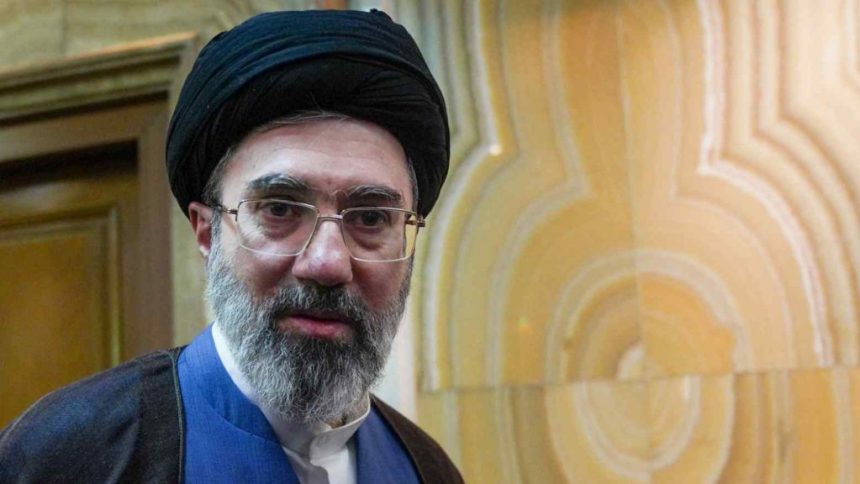
Iran’s Foreign Minister Abbas Araghchi has said the country’s Supreme Leader Mojtaba Khamenei is in good condition, dismissing speculation about his health amid ongoing tensions involving the United States and Israel.
Questions about Khamenei’s wellbeing emerged after reports suggested he had been injured during airstrikes targeting several senior officials of the Islamic Republic. The strikes were part of a joint United States–Israel military operation that has entered its 16th day.
Speculation intensified after Khamenei’s first speech following his appointment as supreme leader was delivered on his behalf by Iranian state media, raising concerns that he might not be able to address the public directly.
During a recent briefing, U.S. Defense Secretary Pete Hegseth claimed Khamenei had been “wounded and likely disfigured” in the strikes, further fuelling uncertainty over the leader’s condition.
However, Araghchi dismissed the claims during an interview with MS NOW, stating that the Iranian leader was continuing to carry out his constitutional duties. “There is no problem with the new supreme leader. He is performing his responsibilities according to the constitution,” he said.
The Iranian minister also condemned recent attacks on strategic locations including Kharg Island and Abu Musa Island, accusing neighbouring countries of allowing their territories to be used for military launches against Iran. He described the alleged involvement of Iran’s neighbours as “absolutely unacceptable.”
According to Araghchi, Iranian military tracking indicated that some rockets were fired from two densely populated locations in the United Arab Emirates, including areas in Ras Al Khaimah and another site near Dubai.
Meanwhile, U.S. President Donald Trump said he had heard conflicting reports about Khamenei’s status. Speaking to NBC News, Trump said it was unclear whether the Iranian leader was alive, adding that if he was, he should consider surrendering.
Trump also confirmed that Washington was coordinating with other countries to safeguard shipping through the Strait of Hormuz. The escalating conflict has disrupted global oil supplies, causing energy prices to surge in international markets.