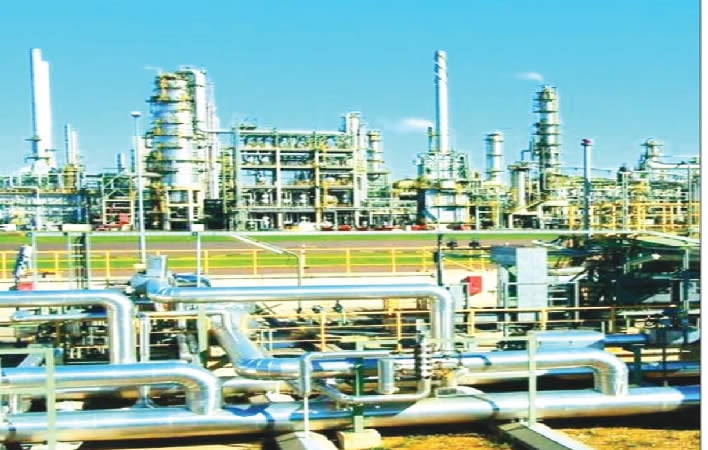
Economic experts have commended the role of the Dangote Refinery in stabilising Nigeria’s fuel supply amid the recent spike in global oil prices.
The refinery, owned by African industrialist Aliko Dangote, has been credited with helping the country avoid a potential fuel shortage that could have worsened inflation and economic pressure on Nigerians.
According to economists, the refinery’s increasing production capacity is gradually reducing Nigeria’s dependence on imported petroleum products, a development they say is critical during periods of volatility in the global energy market.
Recent geopolitical tensions and supply disruptions have triggered a rise in international crude oil prices, raising fears of fuel scarcity in several oil-importing nations. However, analysts note that Nigeria’s situation could have been significantly worse without the presence of a large-scale domestic refining facility.
Experts say the operationalisation of the Dangote Refinery marks a major turning point for Nigeria’s energy security and economic stability.
“The refinery is already playing a strategic role in protecting the Nigerian economy from external shocks in the oil market,” one economist said.
They also noted that local refining could help stabilise petrol prices, reduce foreign exchange pressure and strengthen the country’s balance of trade.
Nigeria has historically relied heavily on imported refined petroleum products despite being one of Africa’s largest crude oil producers. This dependence has often exposed the country to global price fluctuations and supply disruptions.
Analysts believe that the continued expansion of domestic refining capacity—led by the Dangote Refinery—could significantly transform Nigeria’s energy sector and improve long-term economic resilience.
Industry observers also say the refinery may help position Nigeria as a major exporter of refined petroleum products within West Africa and beyond.