Nigeria’s banking sector is entering a decisive stage as the recapitalisation programme initiated by the Central Bank of Nigeria (CBN) approaches a critical deadline aimed at strengthening the country’s financial system.
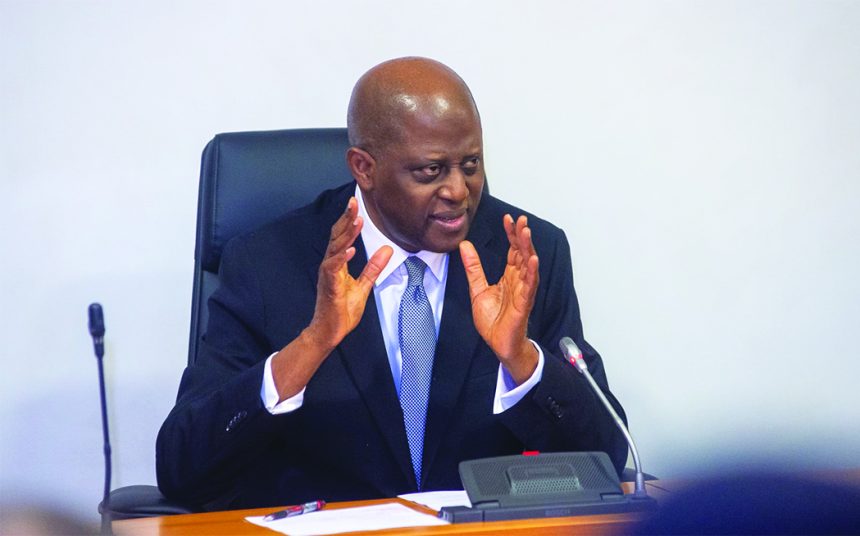
The recapitalisation exercise, one of the most ambitious reforms under the leadership of CBN Governor Olayemi Cardoso, is designed to create stronger and better-capitalised banks capable of supporting Nigeria’s long-term economic growth.
Industry estimates indicate that about N4.05 trillion has already been raised by 20 banks, with the exercise expected to generate as much as N6 trillion in fresh capital before its conclusion.
Stronger Banks for Economic Growth
The CBN believes that a well-capitalised banking system is essential for supporting the Federal Government’s ambition to grow Nigeria’s economy to $1 trillion.
According to Cardoso, strengthening banks’ capital buffers will allow financial institutions to undertake large-scale transactions, finance infrastructure projects and support businesses across key sectors of the economy.
He noted that maintaining strong compliance culture and effective risk management remains central to the CBN’s strategy for ensuring the resilience and credibility of Nigeria’s financial system.
“Our banking system remains fundamentally sound and resilient,” Cardoso said, adding that regulators remain vigilant about emerging risks including cyber threats, operational vulnerabilities and credit concentration pressures.
Verification Process Underway
Under the recapitalisation guidelines, banks are required not only to raise funds but also to subject new capital to a strict verification process before approval.
The verification is conducted by a tripartite committee involving the Securities and Exchange Commission, the Nigeria Deposit Insurance Corporation and the CBN.
This process ensures transparency and confirms that funds raised by banks are legitimate before they are added to their capital base.
Cardoso said stress tests conducted on Nigerian banks show that the financial system remains stable, with key indicators such as the non-performing loan ratio remaining within the prudential benchmark of five percent.
Support from Global and Industry Experts
Financial experts have also highlighted the importance of the recapitalisation exercise for Nigeria’s economic future.
The Country Director of the World Bank in Nigeria, Matthew Verghis, said stronger banks would enable the country to finance infrastructure development, support small businesses and drive inclusive economic growth.
Similarly, the Group Managing Director of United Bank for Africa, Oliver Alawuba, described the policy as timely and essential for positioning Nigerian banks to compete globally.
According to him, stronger capital buffers will enable banks to withstand economic shocks such as inflation, currency volatility and global geopolitical disruptions.
Driving Long-Term Economic Transformation
Analysts believe the recapitalisation programme will strengthen the ability of Nigerian banks to finance major sectors including oil and gas, agriculture, manufacturing and emerging industries such as fintech and green energy.
Experts say the reforms are expected to enhance financial stability while expanding access to credit for businesses, particularly micro, small and medium enterprises.
With the deadline approaching, regulators say the recapitalisation programme remains on track and will play a crucial role in building a more resilient banking system capable of supporting Nigeria’s economic transformation.