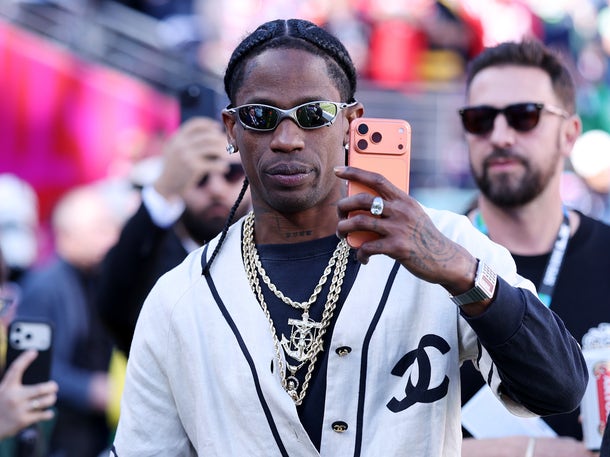
American rapper Travis Scott has voiced support for a Texas death row inmate, arguing that using rap lyrics as evidence in a capital punishment case violates constitutional rights.
The case centres on James Broadnax, who was 19 when prosecutors said he killed two men during a robbery in Garland, Texas. In 2009, a jury found him guilty of double murder and sentenced him to death.
During the sentencing phase of the trial, prosecutors introduced Broadnax’s handwritten rap lyrics as evidence after he had already been convicted. The jury—reportedly composed almost entirely of white jurors—reviewed roughly 40 pages of lyrics while deciding whether he should receive the death penalty.
Prosecutors argued that the content of the lyrics, which referenced violence, robbery and drug dealing, suggested Broadnax posed a continuing threat to society. They claimed the themes indicated he was likely to commit further crimes, an argument that contributed to the jury’s decision to impose the death sentence.
Broadnax is currently scheduled to be executed on April 30. However, his legal team has asked the Supreme Court of the United States to halt the execution and review the case.
An amicus brief filed in support of Broadnax by Scott’s lawyer, Alex Spiro, argues that using rap lyrics as proof of future violence effectively punishes artistic expression. The filing contends that prosecutors portrayed Broadnax as dangerous simply because he performed what they described as “gangster rap.”
According to the brief, removing lyrics from their artistic context risks treating creative expression as literal evidence of criminal intent, which could unfairly criminalise the entire rap genre.
Several prominent hip-hop artists have also backed the appeal, including T.I., Young Thug, Killer Mike and Fat Joe, who joined legal briefs urging the court to reconsider the use of rap lyrics as courtroom evidence.
The Supreme Court has not yet decided whether it will take up the case or intervene to pause the scheduled execution.