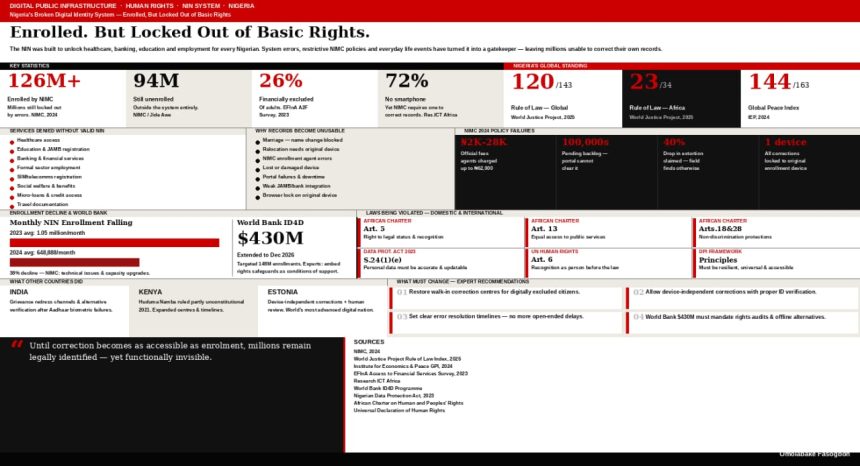
Nigeria’s digital identity framework, designed to expand access to essential services, is facing increasing scrutiny as citizens report difficulties using or correcting their records in the system managed by the National Identity Management Commission (NIMC).
The National Identification Number (NIN), which forms the backbone of the country’s digital identity programme, has become mandatory for accessing services including education, banking, telecommunications, healthcare and social welfare.
However, critics argue that technical challenges, restrictive correction procedures and digital access barriers are preventing many Nigerians from fully benefiting from the system.
Identity Errors Blocking Opportunities
For 18-year-old student Seun Adewale, a mismatch between his name on the NIN database and his examination records prevented him from registering for the university entrance examination conducted by the Joint Admissions and Matriculation Board.
Despite attempts to correct the error through NIMC’s online self-service portal, Adewale said the modification process repeatedly failed, even after paying the required fee.
Unable to resolve the issue before the registration deadline, he missed the opportunity to sit for the examination that year.
Similar complaints have been reported by other Nigerians who say errors in their digital identity records have affected scholarship applications, employment opportunities and access to financial services.
Policy Changes and Digital Access Concerns
Under recent policy adjustments, NIMC shifted many data correction services to a smartphone-based self-service portal.
Officials say the move was intended to reduce extortion, improve security and streamline the modification process.
However, technology analysts warn the system may inadvertently exclude millions of Nigerians who lack smartphones or sufficient digital literacy.
According to estimates cited by experts, a significant portion of the population still has limited access to digital tools required to complete online corrections.
Technology policy specialists say identity systems should remain accessible to all citizens, particularly when they are tied to essential services.
Experts Raise Human Rights Concerns
Digital rights advocates have also warned that limiting access to services through a digital identity system that is difficult to correct could raise human rights concerns.
Lawyers and technology experts argue that identity frameworks should include accessible grievance channels, offline support centres and flexible correction procedures.
They note that digital identity programmes in countries such as India and Estonia have introduced alternative verification options and expanded support systems to reduce exclusion.
Government and Global Support
Nigeria’s digital identity initiative has received international support, including funding from the World Bank through its Identification for Development programme.
The initiative aims to expand identity coverage and improve access to public services across the country.
Government officials have repeatedly stated that the objective of the programme is to ensure every Nigerian has a verifiable and functional identity.
Calls for Inclusive Identity Systems
Policy analysts say the success of digital identity infrastructure depends not only on the number of people enrolled but also on the usability and accessibility of the system.
Experts recommend expanding walk-in correction centres, improving system reliability and providing offline alternatives for citizens who cannot access digital platforms.
They warn that unless these gaps are addressed, millions of Nigerians may remain officially enrolled in the national database while still facing barriers to essential services tied to the digital identity system.