The outcome of the recent Federal Capital Territory Area Council Elections has sparked debate about the political direction of Nigeria ahead of the 2027 general elections.
While the presidential contest is still months away, some analysts believe the results of local electoral exercises in the Federal Capital Territory and other states provide early signals about the evolving political landscape.
APC Gains Ground in the FCT
During the council elections, the All Progressives Congress secured five of the six chairmanship positions in the FCT, capturing key councils such as Abuja Municipal Area Council (AMAC), Bwari, and Kuje, which were previously controlled by the opposition Peoples Democratic Party.
The opposition retained only Gwagwalada Area Council.
In AMAC, considered one of the most politically significant councils in the nation’s capital, the APC recorded a decisive victory, polling more than 40,000 votes—over three times the tally of its closest rival.
Political observers say the result is significant given that the ruling party has historically struggled to secure strong support in the FCT during presidential elections.
A Signal Beyond Local Politics
Although council elections are often viewed as local contests, analysts note that results in the FCT frequently carry broader national implications because the territory serves as the administrative and political centre of the country.
The strong showing by the APC in the FCT has been interpreted by some commentators as evidence of the party’s organisational strength and its ability to mobilise voters at both grassroots and elite levels.
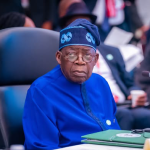
For supporters of President Bola Ahmed Tinubu, the result reflects a political structure that remains cohesive and capable of expanding its influence.
Opposition Challenges
At the same time, critics argue that the opposition remains fragmented, with internal divisions weakening its ability to mount a coordinated challenge ahead of the 2027 elections.
Efforts to build broader political coalitions have been inconsistent, with negotiations among opposition actors often faltering due to competing ambitions and distrust.
Observers also point out that several state governors across different political platforms are seen as maintaining working relationships with the presidency, further complicating opposition efforts to consolidate power.
Governance and Reform Debate
Since assuming office in 2023, President Tinubu has pursued several economic reforms, including the removal of fuel subsidies and adjustments to Nigeria’s foreign exchange policy.
Supporters argue that these policies were necessary to stabilise the country’s macroeconomic environment, while critics say they have imposed significant hardship on citizens.
Recent economic indicators, however, have shown signs of gradual adjustment, including relative stability in the Nigerian Naira and modest improvements in investor sentiment.
Looking Toward 2027
Political analysts say elections in Nigeria are determined not only by public sentiment but also by organisational capacity—such as party structures, grassroots mobilisation, coalition building and voter turnout.
On these metrics, some observers believe the ruling APC currently maintains a structural advantage heading toward the next presidential race.
However, others caution that Nigerian politics remains fluid, and unexpected developments—such as economic shifts, security concerns or new political alliances—could reshape the political environment before the election.
Early Signals, Not Final Outcomes
While the FCT council elections may offer early clues about political momentum, analysts stress that the 2027 presidential election remains open to multiple possibilities.
For now, the results have added another layer to the national political conversation, raising questions about whether the ruling party can sustain its organisational advantage and whether the opposition can reorganise in time to mount a competitive challenge.